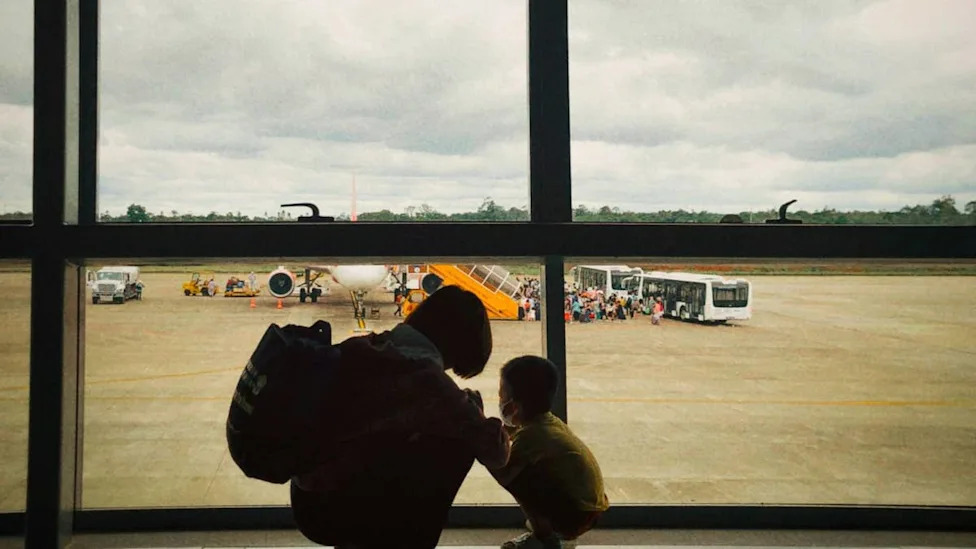
Travel has a way of exposing both the best and most stressful parts of human experience. For most people, an airport is a place of anticipation. For families traveling with children who are autistic, neurodivergent, or have other special needs, it can feel more like a maze of unpredictable sensory triggers, unclear routines, and emotional overwhelm.
That is where American Airlines is quietly reshaping what accessible travel can look like through a program called “It’s Cool to Fly American.” The program recently expanded at Charlotte Douglas International Airport, where families are invited to experience a full “dress rehearsal” of air travel without ever leaving the ground or boarding a real flight.
Inside the “It’s Cool to Fly American” Program: A Full Airport Dress Rehearsal
The core of the program is deceptively simple. Families walk through every step of air travel in a controlled, supportive environment. That includes check-in, security screening, waiting at the gate, boarding a stationary aircraft, and even taxiing along the runway to simulate movement and sound. According to WCNC Charlotte, the experience is designed to mirror a real departure day as closely as possible while removing the pressure of an actual flight .
This is not a staged demonstration behind glass. It is hands-on, sensory-rich, and intentionally immersive. The goal is repetition and familiarity, two things that can dramatically reduce anxiety for children who struggle with unpredictable environments. The airline itself describes the program as a way to help children “become more comfortable with the sensory experience of air travel” by experiencing it step-by-step in advance.
Why Airports Like Charlotte Douglas Matter So Much
The setting is not random and these events are often hosted at major hubs like Charlotte Douglas International Airport, one of the busiest airports in the United States. That scale matters because it reflects what families will actually encounter on real trips.
WCNC Charlotte reports that the Charlotte event brought together families who moved through each stage of the airport journey, from check-in to boarding simulations, in a realistic environment that included actual airport infrastructure. What stood out to me most is that the entire system is learning to adapt back. Many of the volunteers are airline employees, including pilots and flight attendants, who choose to participate to better understand the challenges passengers face. Julie Rath, Senior Vice President of Airport Operations at American Airlines, states, “We know the challenges that children with autism may experience in our airports and during a flight. This program not only helps reduce anxiety and discover the fun and adventure of travel, but it also enlightens our team members to travelers with special needs, which, in turn, helps us promote a more inclusive and compassionate environment for all.”
The Bigger Impact: Confidence, Inclusion, and Real Travel Freedom
Since launching in 2014, the program has grown significantly across the airline’s network. American Airlines reports that thousands of families have participated in these mock airport experiences, with events held in dozens of cities over the years.
But numbers only tell part of the story. The real impact shows up in quieter ways, like when a child who walks confidently through a jet bridge for the first time, or a parent who finally feels comfortable booking a vacation instead of avoiding it.
In one report, airline staff described how families often arrive nervous but leave visibly more relaxed, with children better prepared for what real air travel will feel like. And for families who cannot access a program like this, the airline also offers accessibility support services and pre-travel assistance to help coordinate accommodations and reduce uncertainty before arrival. While not identical to a mock airport experience, these tools still aim to create more predictable travel pathways for passengers with disabilities. If You Don’t Have This Program Nearby: What Travelers Can Do Instead
Not every airport hosts a full rehearsal program like this, but that does not mean families are without options. Many airports and airlines offer accessibility planning tools, including social stories, terminal maps, and pre-visit coordination to help travelers understand what to expect.
Based on reporting from the American Airlines newsroom, the broader goal of initiatives like “It’s Cool to Fly American” is to reduce the mystery of air travel and make the process more understandable for families who experience sensory or developmental challenges.
From a practical standpoint, families often create their own “practice runs” by visiting airports ahead of time, watching walkthrough videos, or even rehearsing travel steps at home. These small acts of preparation can significantly reduce stress on travel day.
Final Descent: What This Program Really Changes
Programs like “It’s Cool to Fly American” do something that feels simple but is actually radical in aviation: they slow the experience down enough for people to learn it. Air travel is usually about speed, efficiency, and movement. This is about understanding before movement.
And for families who once saw airports as overwhelming or impossible, that shift can change everything. Because once the unknown becomes familiar, travel stops being something you fear and starts becoming something you can actually look forward to.