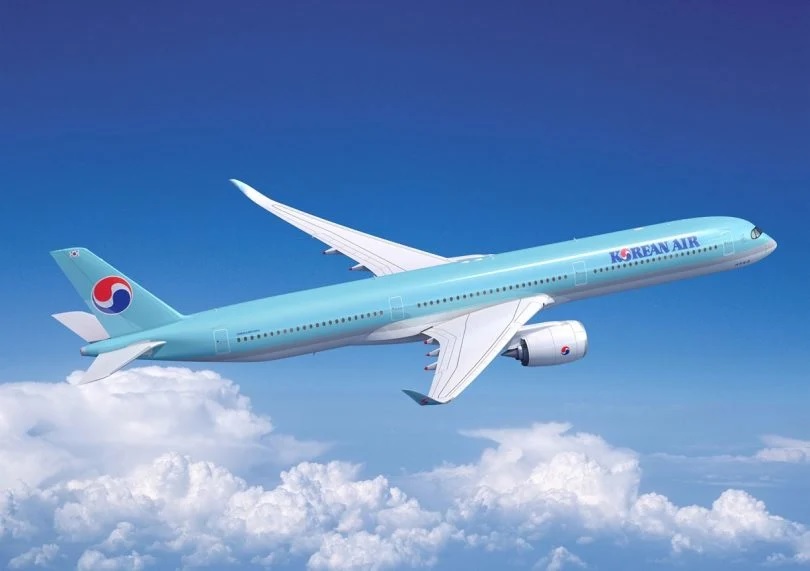
Korean Air’s record first-quarter results highlight strong Europe and transit demand amid geopolitical disruptions. While the Middle East crisis is raising costs, shifting travel flows toward East Asia may be benefiting regional airlines. Early signs suggest the U.S. is relatively less attractive, though no clear structural shift away from American destinations is confirmed.
SEOUL– Korean Air’s record-breaking first quarter has become a focal point in the global aviation industry, highlighting a complex mix of strong post-pandemic demand, geopolitical disruption, and evolving travel patterns that may be subtly reshaping long-haul routes between Europe, Asia, and the United States.
The South Korean flag carrier reported record first-quarter revenue of approximately KRW 4.52 trillion and operating profit of KRW 516.9 billion, marking its strongest first-quarter performance on record. Revenue rose more than 14% year-on-year, driven by both passenger and cargo growth despite mounting geopolitical risks.
Passenger revenue reached KRW 2.61 trillion, supported by Lunar New Year travel and—crucially—strong demand on European and transfer routes, while cargo operations also expanded on high-demand intercontinental lanes.
A Record Result: But not in Isolation
Korean Air’s performance is not an outlier. Rather, it reflects a broader trend among East Asian airlines benefiting from resilient long-haul demand, particularly as global travel continues to normalize.
Industry data shows:
- Asia-Pacific airlines are seeing steady international demand recovery
- Northeast Asia remains one of the fastest-recovering global travel regions
- Long-haul international and transit routes are outperforming domestic or short-haul segments
Japanese and Hong Kong-based carriers have reported similar patterns—solid international demand and strong cargo volumes—though often accompanied by rising costs and operational uncertainty.
The Middle East Crisis: Cost Shock or Demand Boost
The ongoing 2026 Middle East conflict, particularly involving Iran and the closure of key transit corridors, has become a defining factor for the aviation sector—but its impact is dual and contradictory.
1. Negative impact: fuel, routes, and risk
The crisis has:
- More than doubled jet fuel prices in some markets
- Forced airlines to reroute flights, increasing costs
- Disrupted major Gulf hubs like Dubai and Doha, which handle a large share of Europe–Asia traffic
Fuel now represents one of the biggest threats to airline profitability, with some carriers warning of supply shortages and potential flight cancellations.
2. Positive side effect: demand redistribution
At the same time, the crisis has redistributed global traffic flows.
- With Gulf hubs partially disrupted, passenger flows between Europe and Asia are shifting
- Airlines and travelers are increasingly routing via East Asian hubs such as Seoul, Tokyo, and Hong Kong
- European carriers are reallocating capacity to Asia and Africa to avoid Middle Eastern airspace
In Korean Air’s case, industry officials explicitly noted that disruptions in Middle Eastern hubs boosted transit demand via Incheon, directly contributing to its strong quarter.
Conclusion:
The Middle East crisis is not the primary cause of record profits, but it is amplifying demand on alternative routes, indirectly benefiting airlines positioned outside the conflict zone.
Europe- Asia demand Surge: A Structural Shift
One of the most striking elements of Korean Air’s results is the strength of Europe-bound and transit traffic.
Several converging factors are driving this:
1. Rerouting away from the Middle East
With traditional transit hubs disrupted, airlines and passengers are increasingly:
- Avoiding Middle Eastern stopovers
- Choosing direct or East Asia–mediated connections
This has led to increased demand for Europe–Asia direct flights, particularly from carriers based in Northeast Asia.
2. Strong outbound European demand
European long-haul travel demand remains robust, and airlines are:
- Expanding Asia capacity
- Increasing frequencies on key routes to India, Korea, and Southeast Asia
3. Growth of transit hubs like Seoul
Seoul Incheon is emerging as a major alternative global hub, benefiting from:
- Geographic positioning between Europe and Northeast Asia
- Stable operations compared to conflict-affected regions
Is the U.S. Losing Appeal
A more controversial question is whether Korean Air’s results—and similar trends—reflect a shift away from the United States as a destination, particularly for European travelers.
Evidence suggesting relative weakness:
- Early 2026 data shows softening inbound travel to the U.S.
- Airlines such as Qantas are cutting or adjusting some U.S. routes while maintaining or strengthening other long-haul services
But no clear substitution effect:
There is no strong evidence yet that:
- European travelers are systematically choosing Seoul over New York
- Demand is structurally shifting from the U.S. to Korea
Instead, the data suggests:
- A temporary rebalancing of flows, influenced by geopolitics and route availability
- Continued importance of the U.S. as a major long-haul destination
The Cargo Dimension is another driver
Korean Air’s cargo growth also reflects broader global trends:
- Supply chain disruptions and rerouting have increased reliance on air freight
- Demand remains strong in sectors such as:
- Technology (including AI-related hardware)
- Cosmetics and consumer goods
Cargo has become a strategic buffer for airlines, helping offset volatility in passenger markets.
A Fragile Boom: Risks Ahead
Despite strong results, the outlook remains uncertain.
Airlines globally are entering a period characterized by:
- High fuel costs
- Currency volatility
- Geopolitical unpredictability
Even Korean Air warned that:
- The full impact of rising fuel costs will likely hit in subsequent quarters
- Profit margins could come under pressure despite strong demand
Across the industry, airlines are:
- Cutting costs
- Raising fares
- Adjusting networks toward more profitable long-haul routes
Conclusion: A Shifting Global Aviation Map
Korean Air’s record quarter captures a pivotal moment for global aviation:
- Demand is strong, particularly on long-haul and transit routes
- East Asian carriers are benefiting, partly due to geographic advantage
- The Middle East crisis is reshaping traffic flows, not driving growth directly
- The U.S. may be relatively weaker in the short term, but not structurally displaced
What is emerging is not a simple shift from New York to Seoul—but a more fragmented and flexible global travel system, where geopolitical stability, routing efficiency, and airline strategy increasingly determine who benefits.